
Does Your House Need Rewiring? 7 Warning Signs to Know
Last Updated: October 26, 2026
Quick Summary
Your house needs house rewiring if you spot flickering lights, fuses that blow or breakers that trip without cause, scorched sockets or a burning smell, old fuse boxes with rubber cables and no earth, or two-pin sockets and too few outlets. Most homes need house rewiring roughly every 25 to 30 years, or sooner if these warning signs appear. An Electrical Installation Condition Report gives the reliable answer before you commit.
Flickering lights or dimming bulbs that keep returning point to a loose connection or ageing cable.
A breaker that trips with nothing unusual running signals a fault needing proper testing.
Stop using any circuit with scorched sockets, brown stains or a burning smell and call now.
Rubber cables, rewireable fuses and missing earth wires mean the installation is past its safe life.
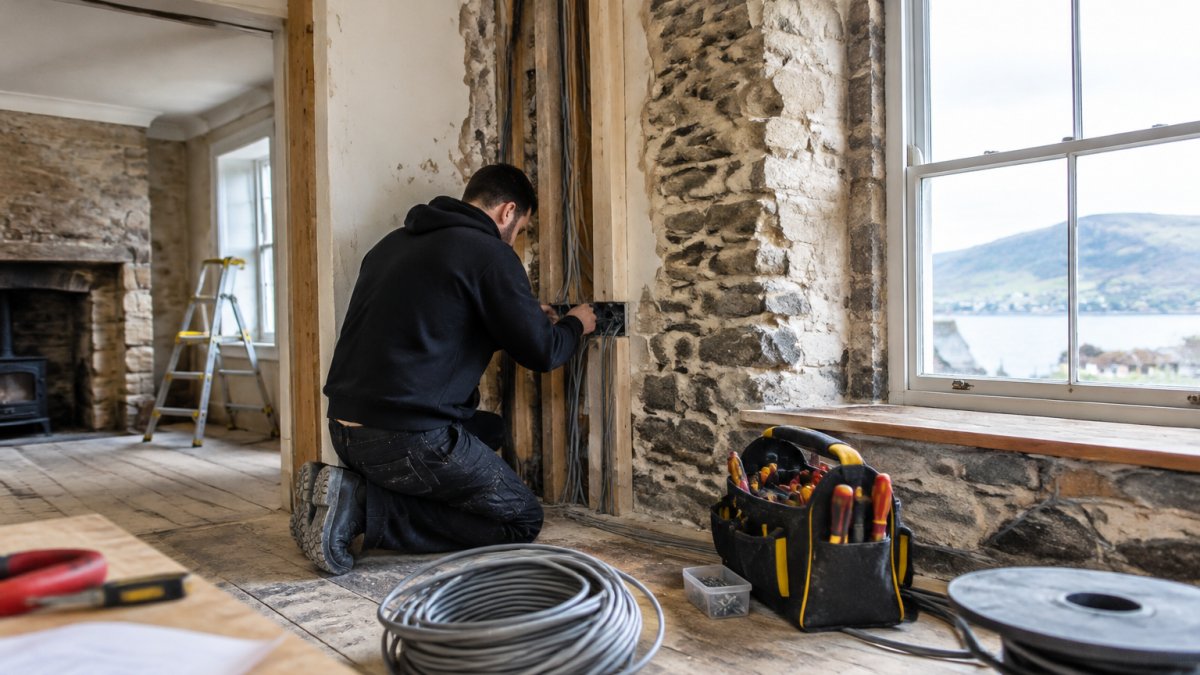
A typical three-bedroom house takes around one to two weeks to rewire.
Table of Contents
How to Tell If Old Electrical Wiring in Your House Is Past Its Safe Life
Warning Sign 1: Flickering Lights and Dimming Bulbs That Keep Coming Back
Warning Sign 2: Fuses That Blow or Breakers That Trip Without a Clear Cause
Warning Sign 3: Scorched Sockets, Brown Stains and a Burning Smell
Warning Sign 4: Old Fuse Boxes, Rubber Cables and Missing Earth Wires
Warning Sign 5: Two-Pin Sockets, Cracked Faceplates and Not Enough Outlets
How Often Should a House Be Rewired and How Long Does It Take to Rewire a House?
How to Tell If Old Electrical Wiring in Your House Is Past Its Safe Life
Flickering lights, warm sockets and fuses that blow for no reason are the classic signs your house needs rewiring, and they matter because faulty wiring is a leading cause of domestic electrical fires. This guide walks through the warnings we see most often on inspections, explains what each one means, and shows you how to decide between a repair and a full rewire. Below, we explain exactly what to check and when to call in a qualified electrician.
Old electrical wiring in a house rarely fails without warning. It gives you clues first. The trouble is that most homeowners read those clues as a minor annoyance, put up with them for months, and only act when something fails outright.
That is the wrong way round. Wiring sits hidden inside walls and under floors, so it degrades quietly. By the time a fault is obvious, the damage has usually been building for years.
Electrical installations in the home are governed by BS 7671, the IET Wiring Regulations, and domestic work must comply with Part P of the Building Regulations. You can read the official guidance on Part P and electrical safety in dwellings. The short version: electrical work is not a DIY job, and an older installation that predates current standards deserves a proper look.
A full rewire is a significant job, and we would rather you understood the signs before committing to one. Here is what to look for.
Sign | What it usually means | Urgency |
Flickering lights, dimming bulbs | Loose connection or ageing cable | Investigate within weeks |
Fuses blowing, breakers tripping | Fault in circuit or overloaded wiring | Book an inspection |
Scorch marks, burning smell | Overheating at a connection | Stop using, call now |
Old fuse box, rubber cables, no earth | Installation past its safe life | Plan a rewire |
Two-pin sockets, cracked faceplates | Outdated, undersized circuits | Plan an upgrade |
Warning Sign 1: Flickering Lights and Dimming Bulbs That Keep Coming Back
Lights that flicker once are usually a bulb on its way out. Lights that flicker repeatedly, or dim when an appliance kicks in, point to something deeper in the circuit. A loose connection at a terminal, a cable that has been carrying more load than it was designed for, or a failing junction box will all produce this pattern.
The giveaway is consistency. If the same light flickers, or the whole house dims when the kettle boils, the fault is in the wiring rather than the fitting. That is a fire risk, not a cosmetic one, because a loose connection generates heat at the point of resistance.
A common mistake is to keep replacing bulbs and hope the problem goes away. It will not. Get it checked.
Warning Sign 2: Fuses That Blow or Breakers That Trip Without a Clear Cause
A breaker that trips when you plug in a faulty appliance is doing its job. A breaker that trips with nothing unusual running, or a fuse that blows again and again, is telling you the circuit has a problem.
Repeated tripping often means a fault somewhere in the wiring, an overloaded circuit, or an earth leakage issue that needs proper testing to trace. Resetting the breaker each time and carrying on is how small faults become dangerous ones.
If you are unsure whether your tripping is a fault or just an overload, our guide to the 7 signs you need an electrician to find an electrical fault explains what to watch for and when to stop resetting and start calling.
Warning Sign 3: Scorched Sockets, Brown Stains and a Burning Smell

This is the sign that moves from "book an inspection" to "act today". Brown staining around a socket, blackened plastic, or a fishy burning smell near a fitting all indicate overheating at a connection. Heat like that comes from resistance, and resistance comes from a poor or deteriorating connection.
Watch out: a scorched socket can smoulder inside the wall long before it flames. Stop using that circuit and arrange an inspection rather than waiting to see if it settles down.
Warning Sign 4: Old Fuse Boxes, Rubber Cables and Missing Earth Wires
An old fuse box with rewireable fuses, cables with rubber insulation, or sockets with no earth connection are all signs that the installation predates modern safety standards. Rubber insulation becomes brittle with age and crumbles, leaving bare conductors exposed inside the wall.
If your fuse box still takes fuse wire, or you can see fabric or rubber cable anywhere in the property, the installation has reached the end of its safe life. Replacing the consumer unit alone will not fix cables that are perished behind the plaster.
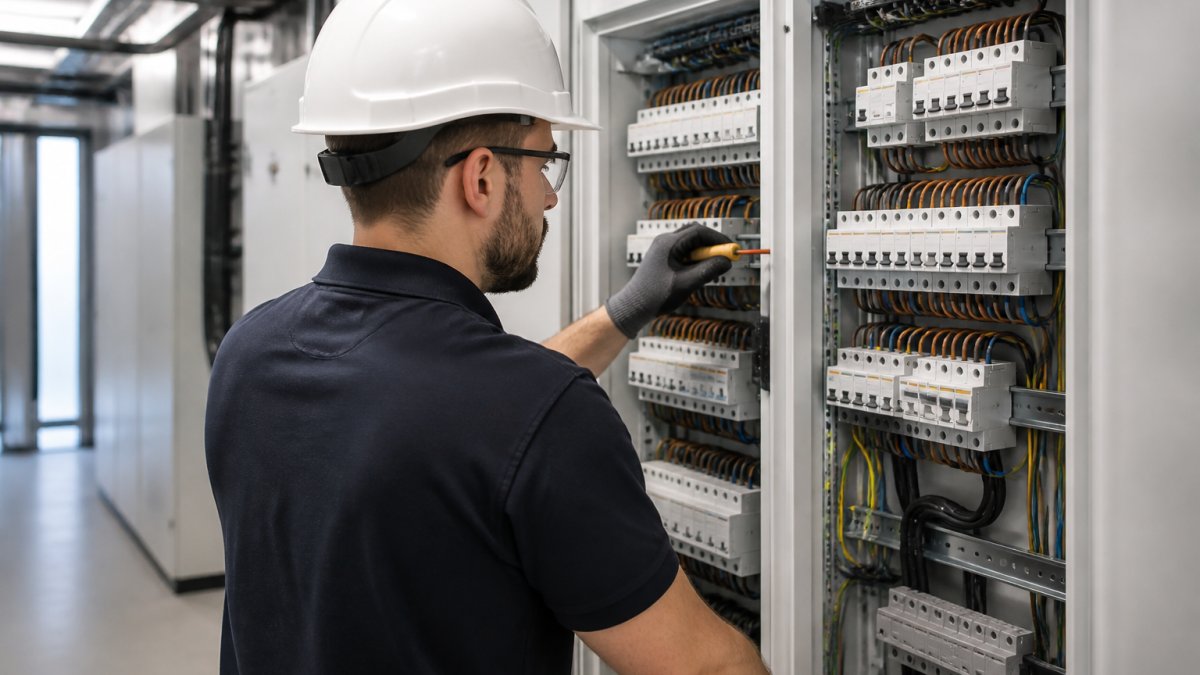
An old fuse box is also a cue to check whether the panel itself needs replacing. Our article on signs your fuse box needs replacing covers what to look for and what a modern unit should include.
Warning Sign 5: Two-Pin Sockets, Cracked Faceplates and Not Enough Outlets
Two-pin sockets without an earth, cracked faceplates and a house that never has enough outlets are signs of an installation designed for a different era. When a home has too few sockets, people reach for extension leads and multi-plug adaptors, which overload circuits that were never sized for the load.
Cracked faceplates are a straightforward shock risk, and two-pin sockets offer no earth protection at all. Both point to wiring that needs updating rather than patching.
How Often Should a House Be Rewired and How Long Does It Take to Rewire a House?
Most homes need house rewiring roughly every 25 to 30 years, or sooner if the installation shows the warning signs above. Age alone is a guide, not a rule: a well-maintained installation that tests clear can last longer, while an older one with rubber cables may need replacing well before the 25-year mark.
The reliable answer comes from an Electrical Installation Condition Report, which tests the installation and grades its condition. If you want to understand the benefits before committing, our guide to the benefits of full property rewiring explains what a rewire actually improves.
How Long Does It Take to Rewire a House?
A typical three-bedroom house takes around one to two weeks to rewire, depending on size, access and how much making good is needed afterwards. Occupied homes usually take longer because the electrician works around furniture and daily life. Larger properties, or those with difficult access behind solid walls, can run longer.
Book an Electrical Inspection for a House Before You Decide
Before you commit to a rewire, get the installation tested. An electrical inspection for a house gives you a clear picture of what is safe, what is deteriorating, and what genuinely needs replacing. If you want to know what to expect on the day, our article on how long an EICR takes explains the timescales.
At Bright Sparx Electrical, we provide a free full inspection, and all work is carried out by our in-house team and never outsourced. We are Part P registered and 18th edition compliant, and every job is certified and insured. You get a straight answer on whether you need a repair or a rewire, with fair and transparent pricing.
If any of the signs above sound familiar, do not wait for a fault to force the issue. Get in touch with Bright Sparx Electrical and book your free inspection so you can decide with the facts in front of you, not a guess.
Frequently Asked Questions
What are the signs that a house needs rewiring?
The clearest signs include flickering or dimming lights, fuses that blow or breakers that trip repeatedly, scorched sockets, a burning smell near outlets, and old fuse boxes with rubber or fabric-covered cables. Two-pin sockets and missing earth wires are also strong indicators. Any of these mean the wiring in your house should be checked by a qualified electrician before it becomes a fire risk, and a full inspection will confirm whether house rewiring is needed.
How old does a house have to be before it needs rewiring?
Wiring installed before the 1970s is the biggest concern, because rubber and lead-sheathed cables degrade with age and often lack an earth connection. Properties built before the 1960s are the most likely to need a full rewire. Age alone is not the deciding factor, though: how often a house should be rewired depends on cable condition, previous alterations, and whether the installation meets current 18th edition standards. An inspection gives you the real answer.
Can I stay in my house while it is being rewired?
In most cases yes, though it is disruptive. Power is cut to circuits for periods during the day, and floors and walls are opened to route new cables. Many homeowners plan to be out during the working day and keep one usable circuit for essentials. How long does it take to rewire a house? A typical three-bedroom property takes around five to ten working days, so plan for temporary inconvenience and discuss the schedule with your electrician upfront.
Does a full rewire require an electrical inspection?
Yes. A proper electrical inspection for a house should come first, covering the consumer unit, earthing, bonding and cable condition, so the electrician can confirm whether a full rewire is genuinely needed or a partial upgrade will do. In the UK, notifiable domestic work must comply with Part P of the Building Regulations, and you should receive an Electrical Installation Certificate on completion. Ask for proof of registration and insurance before any work starts.
CONTACT US
Add brightsparxelectrical.net as a preferred source on Google →

Comments