
Benefits of Full Property Rewiring: A Homeowner's Guide
Table of Contents
Why Full Property Rewiring Matters More Than You Think
Signs a House Needs Rewiring: When to Stop Ignoring the Warning Signs
Warning Signs You Should Never Overlook
The Safety and Financial Benefits of Full Property Rewiring
Protecting Your Home and Your Family
Adding Value and Reducing Long-Term Costs
What Happens During a House Rewire: A Step-by-Step Overview
How Long Does a House Rewire Take?
Full House Rewire Cost: What Affects the Price
Conclusion
Frequently Asked Questions
Last Updated: October 18, 2026
Why Full Property Rewiring Matters More Than You Think
Most homeowners only think about their wiring when a fuse blows or a socket stops working. That is the wrong moment to start paying attention. The benefits of full property rewiring run far deeper than fixing a fault: they cover fire safety, insurance validity, resale value and the practical capacity to run a modern home.
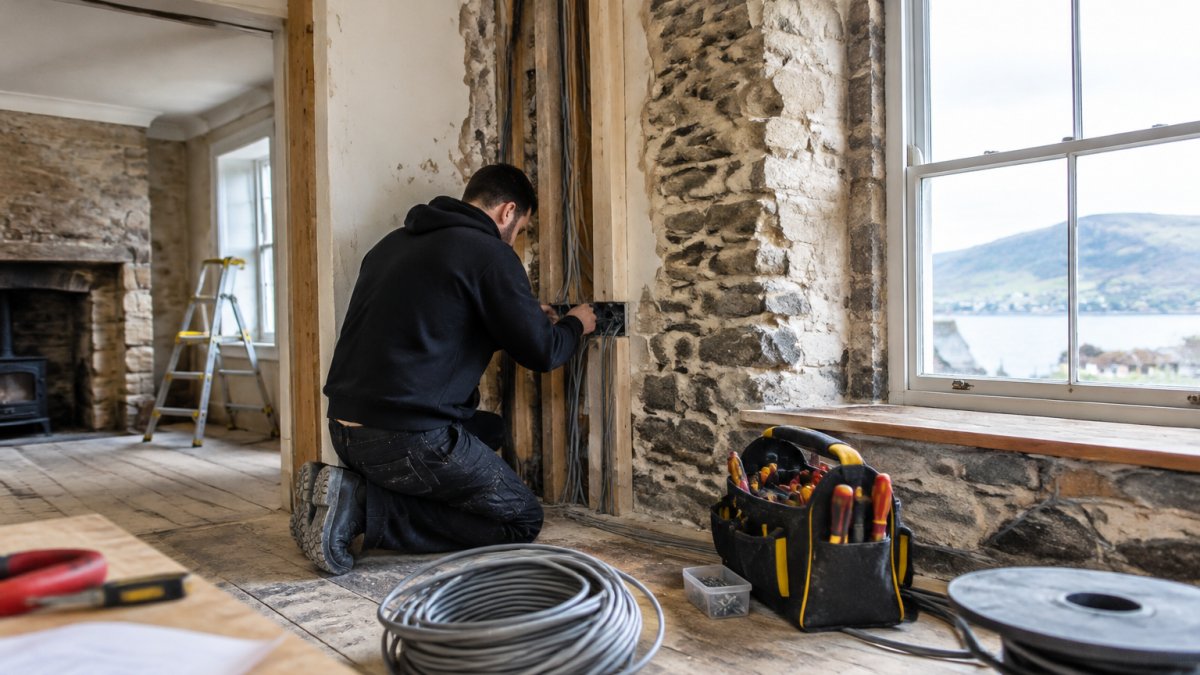
Property rewiring is the complete replacement of a building's fixed electrical installation, including cables, sockets, switches, consumer unit and earthing. It is not a patch-up job. It is the one upgrade that touches every circuit in the house at once.
Homes wired decades ago, extended piecemeal, often carry far more load than the original installation was designed for. Old cable insulation becomes brittle, connections loosen, and earthing arrangements fall short of what modern regulations expect. None of that announces itself loudly. It sits behind plasterboard until something fails.
The Electrical Safety First guidance on home wiring is blunt about the risk: deteriorated wiring is a leading cause of domestic electrical fires, and the damage is usually invisible until it is dangerous. That is the case for treating rewiring as preventive maintenance, not emergency repair.
Watch Out The most common mistake we encounter is assuming a recent consumer unit upgrade means the whole installation is safe. A new consumer unit protects the circuits it serves, but it cannot compensate for perished cable hidden in the walls or outdated earthing. Testing, not guesswork, tells you where you stand.
Signs a House Needs Rewiring: When to Stop Ignoring the Warning Signs
If your property is still running on rubber or fabric-insulated cable, has no residual current device protection, or shows any of the symptoms below, arrange a professional inspection before you do anything else. The signs a house needs rewiring are rarely dramatic, which is exactly why they get ignored for years.
Warning Signs You Should Never Overlook
Sockets or switches that feel warm, buzz, or show scorch marks
Fuses blowing repeatedly, or the consumer unit tripping without an obvious cause
A burning or fishy smell near outlets, which often signals overheating insulation
Cracked, brittle or fabric-covered cable visible in the loft, cellar or behind skirting
Two-pin sockets, or sockets with no earth connection
Lights that flicker when appliances switch on
An installation with no residual current device (RCD) protection
A common mistake is treating flickering lights as a bulb problem. In older properties, it frequently points to a loose neutral or an overloaded circuit, and both warrant investigation rather than a trip to the shop.
The Safety and Financial Benefits of Full Property Rewiring
The strongest argument for a full rewire is simple: it removes the hidden fire and shock risks that testing cannot permanently cure in an ageing installation. The financial case follows closely behind.
Protecting Your Home and Your Family
Modern rewiring brings RCD protection on circuits that need it, correct earthing, adequate cable sizing for today's appliances, and proper separation of circuits so a single fault does not take out the whole house. It also brings the installation in line with the current edition of the Wiring Regulations, which is the standard any competent electrician works to. You can read the IET guidance on BS 7671 for the technical detail, but the practical upshot is straightforward: compliant wiring is safer wiring.
There is also an insurance dimension. Many policies require the electrical installation to be maintained in good order, and a claim following an electrical fire can be complicated if the wiring was clearly past its useful life. Documented, certified rewiring removes that argument entirely.
Adding Value and Reducing Long-Term Costs
A rewire is one of the few home improvements a buyer's surveyor will actively look for. A documented, certified installation reassures buyers and often supports the asking price. It also ends the cycle of repeated small repairs: chasing faults in deteriorating cable costs money again and again, while a full rewire resets the clock for decades.
Pro Tip Keep the certification and test results from your rewire in the same folder as your boiler service records. When you sell, that paperwork is worth more than any verbal assurance about the wiring.
What Happens During a House Rewire: A Step-by-Step Overview
A house rewire follows a defined sequence, and knowing it in advance removes most of the anxiety. The work starts with a full inspection and test, then moves through first fix, second fix and certification.

Inspection and testing. We assess the existing installation and confirm what a rewire needs to cover.
Plan and quotation. Circuits, socket positions and any extras are agreed in writing before work begins.
First fix. New cable is run through floors, walls and loft spaces, with back boxes fitted.
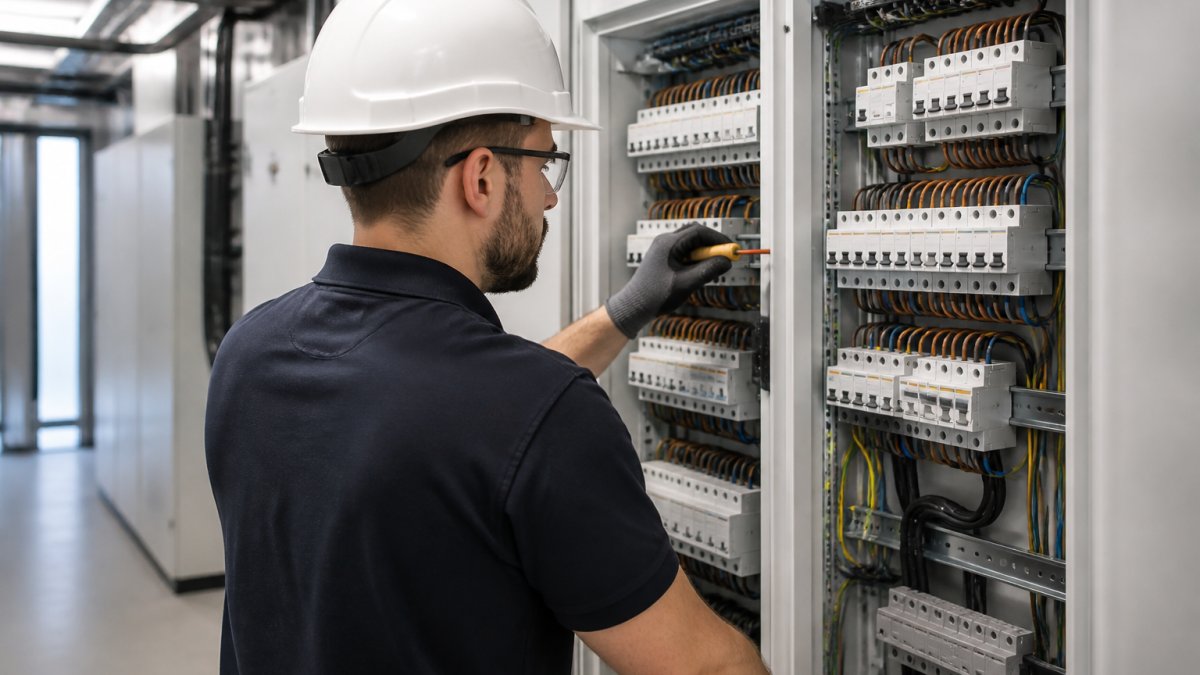
Consumer unit and earthing. The new board and earthing arrangements are installed.
Second fix. Sockets, switches, lights and fittings are connected.
Testing and certification. The installation is tested and you receive the certificate confirming compliance.
At Bright Sparx Electrical, every stage is carried out by our in-house team, never subcontracted, and all work is certified and insured under our Part P registration.
How Long Does a House Rewire Take?
A typical three-bedroom occupied house takes roughly one to two weeks, though the honest answer is that duration depends on property size, accessibility and how much making good is involved. An empty property is always faster than an occupied one, because furniture, flooring and stored belongings slow every stage.
Older buildings with solid walls, lath-and-plaster ceilings or limited loft access take longer than a modern timber-frame home. If you are living in the property during the work, expect some days without power to specific circuits and plan accordingly. We give every customer a realistic schedule up front rather than an optimistic one, because a missed date costs you more than an honest estimate.
Full House Rewire Cost: What Affects the Price
There is no single figure for a full house rewire cost, and any electrician who quotes one over the phone without seeing the property is guessing. Pricing depends on the number of circuits and outlets, property size and age, ease of access to cable routes, whether the property is occupied, and how much plastering and making good is required afterwards.
Bright Sparx Electrical provides a free full inspection and a clear written quotation before any work starts, so you know exactly what you are paying for and why.
Key Takeaway The cheapest quote is rarely the cheapest rewire. Ask every electrician for their Part P registration, insurance details and a written breakdown of what the price includes. If any of those are missing, walk away.
Conclusion
Deciding to rewire is rarely urgent until it suddenly is, and by then you are dealing with damage rather than prevention. The safer path is to have the installation inspected, understand its true condition, and plan the work on your terms.
Bright Sparx Electrical handles full property rewires with a Part P registered, 18th edition compliant in-house team, certified and insured work, and a free full inspection to start. Get in touch with Bright Sparx Electrical and get a clear, honest assessment of what your property actually needs.
Frequently Asked Questions
What are the benefits of a full property rewire?
A full property rewire improves safety by replacing old, deteriorating cables that can cause electric shocks or fires. It brings your electrics up to current 18th Edition standards, adds modern safety devices like RCDs, supports extra appliances and technology, and can increase your property's value. It also gives you certified documentation confirming the work is compliant, which matters for insurance, mortgages and rental compliance.
How do I know if my property needs rewiring?
Common signs a house needs rewiring include flickering lights, sockets that feel warm or show scorch marks, frequent tripped fuses, buzzing sounds from switches, and old rubber or fabric-covered cables. If your property has not been rewired in 25 to 30 years, or an EICR flags C1 or C2 issues, a full rewire is likely the safest option.
Does rewiring a house make it safer?
Yes. Rewiring replaces worn cables and outdated fuse boxes with modern consumer units fitted with RCD protection, which cuts the risk of electric shock and electrical fires. It also removes hazards such as deteriorated insulation and overloaded circuits. All work should be carried out by a Part P registered electrician and certified on completion, giving you documented proof the installation meets current safety standards.
Can a full rewire improve a property's value?
A full rewire can support a higher asking price because buyers and surveyors view certified, compliant electrics as a lower-risk purchase. It removes a common negotiation point, as old wiring often prompts buyers to request a reduction. Keep the Electrical Installation Certificate and EICR report to show prospective buyers, landlords or mortgage lenders that the property's electrics are safe and up to date.
CONTACT US

Comments