
How to Know What Happens During an Electrical Safety Inspection
Last Updated: November 14, 2026
Quick Summary
An electrical safety inspection is a structured check of a property's fixed wiring and electrical accessories, combining a visual inspection with physical testing of the circuits. The electrician isolates the supply, tests a sample of sockets, switches and light fittings with calibrated equipment, then records and codes the results. You receive a written report, usually an EICR, listing any faults and their grades.
Clear access to the consumer unit and move furniture away from sockets before the electrician arrives.
The supply is isolated and proved dead before dead tests such as insulation resistance and polarity begin.
Sockets, switches and light fittings are sampled rather than tested exhaustively to keep the visit to a sensible length.
A report containing any C1 or C2 observation is classed as unsatisfactory.
Ask to see the electrician's test equipment calibration record before any testing starts.
Not sure what your EICR codes mean?
Bright Sparx Electrical explains your report and quotes any remedial work clearly.
Table of Contents
What an Electrical Safety Inspection Involves
An electrical safety inspection is a structured check of the fixed wiring and electrical accessories in a property. It combines a visual inspection with physical testing, and it ends with a written report on the condition of the installation.
An electrical safety inspection follows a set routine, so you know what to expect before anyone touches your consumer unit.
Here is the short version:
A qualified electrician checks the age, condition and safety of the wiring
Circuits are tested with calibrated equipment
Results are recorded and graded
You receive a report with any faults listed
The formal version of this process is the Electrical Installation Condition Report, usually called an EICR (Electrical Safety Advice for Landlords). It is the document landlords need for rented property, and it is the report most safety inspections produce.
Electrical Inspection Preparation: What to Do Before the Electrician Arrives
Preparation is simple, and it saves time on the day. The main job is making sure the electrician can reach every consumer unit, socket and fitting that needs testing.
Do these before the visit:
Clear access to the consumer unit or fuse box
Move furniture away from sockets on the walls
Note any circuits that trip or flicker
Tell the electrician about any recent damage or DIY work
Secure pets away from the work area
Expect the power to go off at points during the visit, as physical testing needs the supply isolated. Save your work and charge devices beforehand.
If you rent the property, arrange access with your tenant in good time. Watch out: turning up without confirmed access wastes the appointment.
A Step-by-Step Walkthrough of the Appointment
The appointment runs in a fixed order, and most of the time goes on testing rather than talking. Knowing the sequence helps you plan the day and understand why the power goes off when it does.
Here is how a typical visit unfolds:
Arrival and initial discussion. The electrician confirms the scope of the visit, asks about the age of the installation, any recent DIY work, and any circuits that trip or flicker. This conversation shapes where the visual inspection and testing focus.
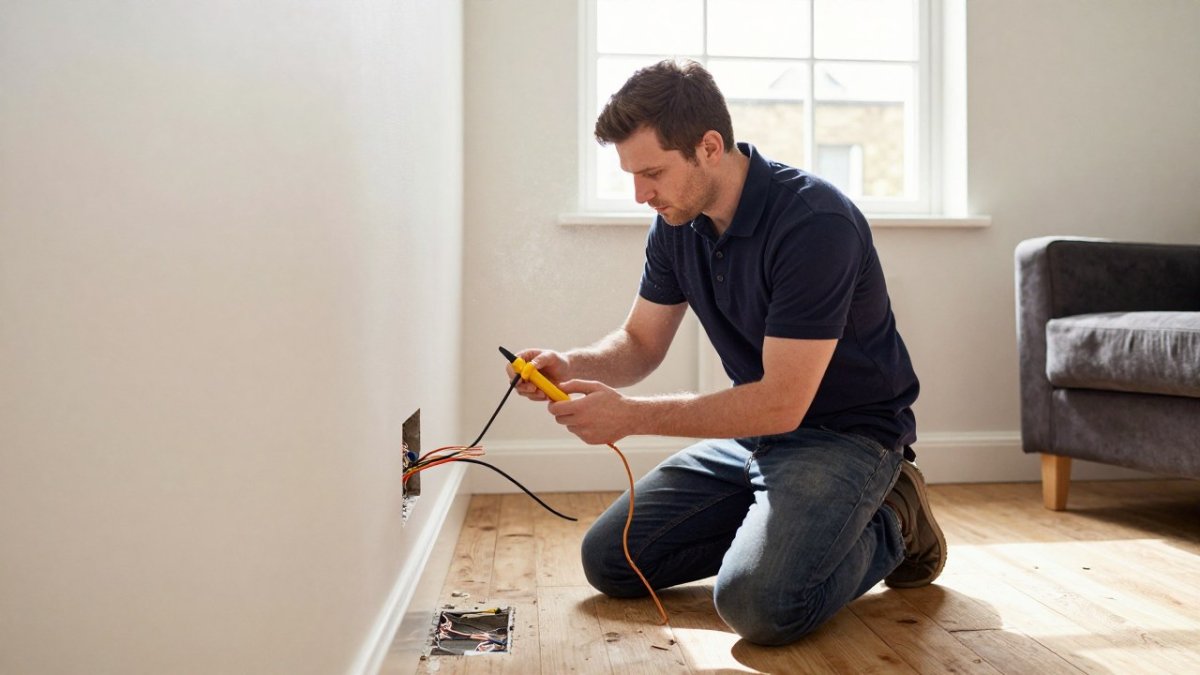
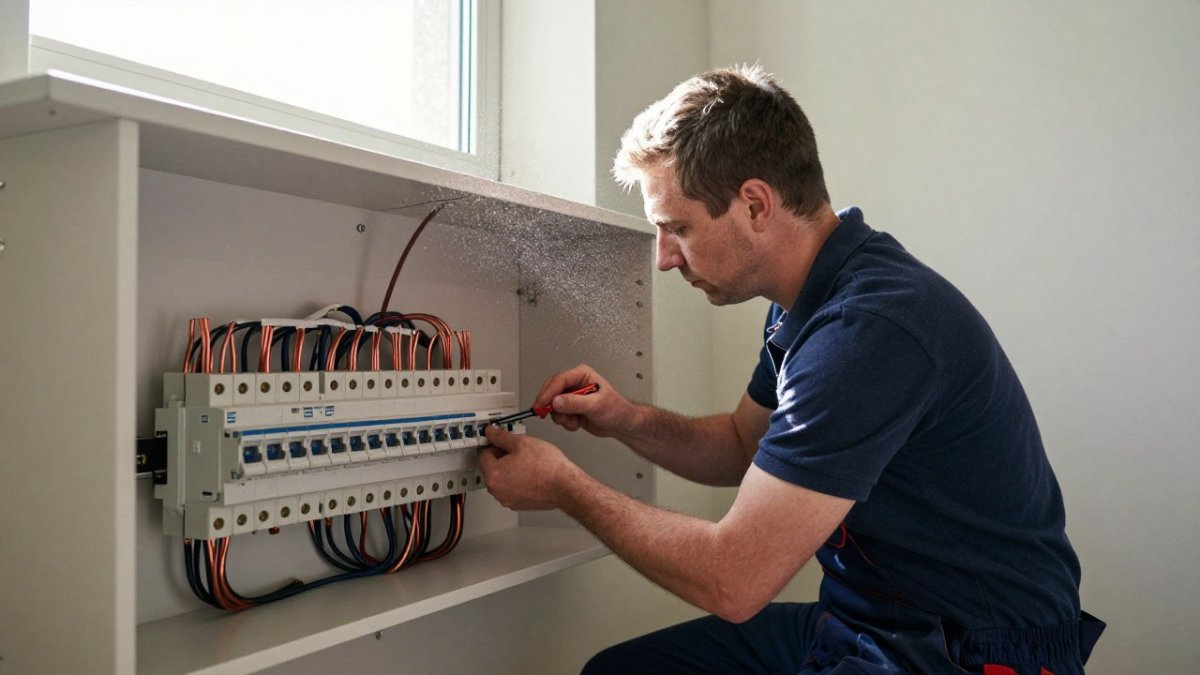
Visual inspection of the installation. Before any test instrument is connected, the electrician inspects the consumer unit, protective devices, cables, accessories, earthing and bonding for signs of damage, overheating, moisture or non-compliant work.
Safe isolation. The supply is isolated and proved dead using a voltage indicator and proving unit. This is why the power goes off during testing.
Physical testing of circuits. With the supply isolated, the electrician carries out dead tests such as continuity of protective conductors, ring final circuit continuity, insulation resistance and polarity. Live tests, including earth fault loop impedance and prospective fault current, follow once the supply is restored.
Sampling of accessories. Sockets, switches and light fittings are sampled rather than tested exhaustively. The sample size depends on the size of the installation and what the visual inspection has already revealed.
Recording and coding. Results are written onto the schedule of test results, and observations are coded on the condition report.
Handover and summary. Before leaving, the electrician explains the headline findings, flags any danger present, and confirms when the full report will be issued.

Visual Inspection of Fixed Electrical Installations
The visual inspection comes first, and it often finds more than the tester does. The electrician looks at the fixed electrical installations for signs of damage, wear and tear, and unsafe condition.
Areas checked include:
The consumer unit and its protective devices
Cables and wiring routes
Sockets, switches and light fittings
Earthing and bonding connections
Signs of overheating, scorching or moisture
Anything that looks wrong gets noted for closer testing. A loose connection or a cracked accessory is easy to spot by eye and confirms where the tester should focus.
Physical Testing of Circuits, Sockets and Switches
Physical testing confirms what the visual inspection suggests. The electrician uses calibrated testers to measure insulation resistance, earth continuity and polarity across the circuits.
Testing is done on a sample of lights, sockets and switches rather than every single accessory. This is normal practice and keeps the visit to a sensible length. Results are written down as they are taken.
Watch out: never let anyone test your installation without asking to see their test equipment calibration record. Uncalibrated testers give unreliable readings, and the report is worth very little without them.
How Long Does an Electrical Safety Inspection Take?
The length of a domestic electrical safety inspection depends on the property. A small flat with few circuits takes less time than a larger house with outbuildings, extensions or a busy consumer unit.
Several things affect the inspection duration:
The size and age of the property
The number of circuits and accessories
Access to sockets and fittings
Whether previous test results are available
Commercial premises take longer again, often a full day for a small office. For a closer look at timings, see our guide on how long an EICR takes.
Your Electrical Safety Inspection Checklist
A checklist helps you compare what was promised with what was done. Use this one to prepare and to check the visit afterwards.
Consumer unit and fuse box inspected
Protective devices checked
Cables and wiring inspected for damage
Socket outlets and switches sampled and tested
Light fittings checked
Earthing and bonding confirmed
Insulation resistance tested
Polarity confirmed
Results recorded on the inspection report
Faults graded and explained
For commercial premises, the list grows. Our guide to a commercial electrical safety checklist covers the extra items an office or shop needs.
EICR Codes C1 C2 C3 FI Explained
Every observation on an EICR is given a classification code, and the code tells you how urgent the finding is. The overall report is then marked satisfactory or unsatisfactory depending on the worst code recorded.
Code | Meaning | Typical action |
C1 | Danger present, risk of injury | Isolate the affected circuit immediately and carry out urgent remedial work |
C2 | Potentially dangerous | Remedial work needed as soon as practicable |
C3 | Improvement recommended | Not urgent; plan and monitor |
FI | Further investigation required | More testing needed before the observation can be graded |
A report containing any C1 or C2 observation is classed as unsatisfactory. A report with only C3 observations can still be satisfactory, because C3 items are recommendations rather than dangers. FI is not a grade in itself; it means the electrician could not reach a conclusion without further investigation, and the report should say what that investigation involves.
For landlords, the codes carry legal weight, so check the current requirements for rented property with the official government guidance. Our guide to EICR rules for landlords explains what each code means for your obligations.
Watch out: a C3 is not a clean bill of health. It is a recommendation, and leaving several C3 items unaddressed over successive inspections is how they become C2 findings.
What Happens When a Fault Is Found
Finding a fault is normal, and it is the reason for the inspection. The electrician records it, codes it, and explains what it means before leaving.
What happens next depends on the code:
C1 faults are made safe straight away where possible
C2 faults are quoted for remedial work
C3 items go on a planned maintenance list
FI items trigger further testing before a grade is given
A good electrician will not leave you guessing. Ask for the fault, the code and the fix in plain terms.
Booking Your Electrical Safety Inspection
Booking is the easy part, provided you check two things first: certification and insurance. Ask for the electrician's registration details and confirm their certification before you book.
Then confirm:
The scope of the visit and what the report covers
Whether the price includes the report
Access arrangements and expected duration
What happens if faults are found
Before you commit, it helps to know how to check an electrician's certification status, and if you are weighing up several firms, our advice on finding reliable electrical contractors covers the questions worth asking.
Bright Sparx Electrical works to the 18th edition, and all work is completed by our in-house team, certified and insured.
An unsatisfactory report is not a disaster, but an unaddressed one can be. If your inspection is due, or you have a report in hand and need the faults put right, Bright Sparx Electrical can help. Our Part P registered team completes every job in-house, provides a free full inspection, and leaves you with certified, fully tested work and fair, transparent pricing. Get started with Bright Sparx Electrical and book your inspection with confidence.
Frequently Asked Questions
Will the electricity be switched off during an electrical safety inspection?
Yes, the power will be turned off for parts of the inspection so the electrician can safely test circuits and connections. This usually happens during physical testing rather than the visual inspection. Plan ahead if you work from home or rely on medical equipment. The electrician will warn you before isolating any circuit and restore power as soon as each test is complete.
What happens if an electrical inspection finds a problem?
The electrician records the issue on the Electrical Installation Condition Report and gives it a code. A C1 or C2 fault means the installation is unsatisfactory and remedial work is needed, often urgently. You will receive a clear explanation of what is wrong and a quote for fixing it. Bright Sparx Electrical carries out its work in-house, so you are not left to find another contractor.
How long does an electrical safety inspection take for a rental property?
The time an EICR takes depends on the property. A larger property with more circuits, outbuildings or access difficulties can take longer. The electrician needs clear access to the consumer unit, sockets, switches and light fittings, so removing obstacles beforehand helps keep the visit on schedule.
Do I need to prepare my home for an electrical safety inspection?
Clear access is the main thing. Move furniture away from the consumer unit, sockets and light fittings, and make sure the electrician can reach every room that needs testing. Note down any flickering lights, tripping circuits or warm sockets so you can point them out. Secure pets. If you have a recent EICR or installation certificates, have them ready, as previous results help the electrician judge wear and tear.

Comments